Dental Implant service image
Dental Implant

A dental implant is a titanium post (like a tooth root) that is surgically positioned into the jawbone beneath the gum line that allows your dentist to mount replacement teeth or a bridge into that area. An implant doesn't come loose like a denture can. Dental implants also benefit general oral health because they do not have to be anchored to other teeth, like bridges. Because implants fuse to your jawbone, they provide stable support for artificial teeth. Dentures and bridges mounted to implants won't slip or shift in your mouth — an especially important benefit when eating and speaking. This secure fit helps the dentures and bridges — as well as individual crowns placed over implants — feel more natural than conventional bridges or dentures. For some people, ordinary bridges and dentures are simply not comfortable or even possible, due to sore spots, poor ridges or gagging. In addition, ordinary bridges must be attached to teeth on either side of the space left by the missing tooth. An advantage of implants is that no adjacent teeth need to be prepared or ground down to hold your new replacement tooth/teeth in place. To receive implants, you need to have healthy gums and adequate bone to support the implant. You must also commit to keeping these structures healthy. Meticulous oral hygiene and regular dental visits are critical to the long-term success of dental implants. Implants can be done in young as well as aged individuals. Dental Implants stay in the jawbone without reacting for years together and maybe a lifetime. Dental implants can be used to replace a single missing tooth to multiple teeth or even completely missing teeth. Implants can be used in various combinations to manufacture an implant supported bridge and dentures too. Implant placement involves surgical reflection of the gums/mucosa and placement of the implant, followed by closure, after which the croens are placed. Implant can be place immediately after tooth extraction too, provided infection is not present in bone. Implants have several advantages over a conventional tooth supported bridge.

Crown and bridge service image
Crown and bridge

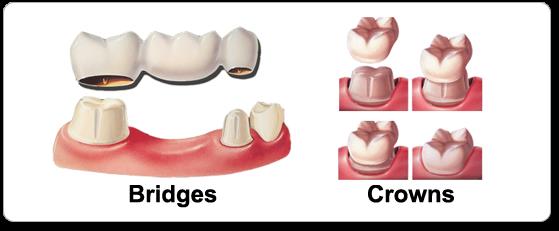
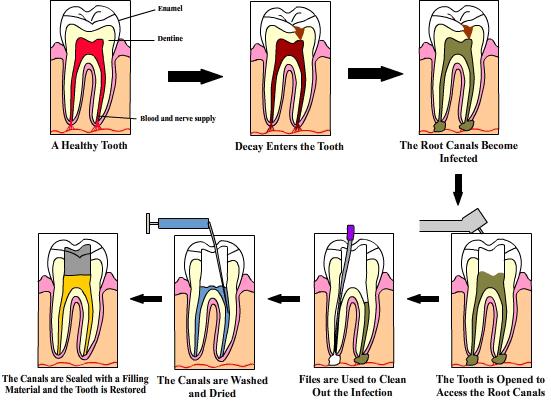
A crown is used to entirely cover or "cap" a damaged tooth. Besides strengthening and protecting a damaged tooth, a crown can be used to improve its appearance, shape or alignment of a tooth. A crown can also be placed on top of a natural tooth or an implant to provide a tooth-like shape and structure for function. A crown restores the function and appearance of a damaged, reconstructed or missing tooth. Traditionally, crowns are of 3 types- metal (non-aesthetic), metal-ceramic (Porcelain fused to metal/ PFM) which is tooth colored or ceramic only (metal-free). A Bridge (Fixed partial denture/FPD) - may be recommended if you have missing one or more teeth. Gaps left by missing teeth eventually cause the remaining teeth to rotate or shift into the empty spaces, resulting in a bad bite. The imbalance caused by missing teeth can also lead to gum disease and temporomandibular joint (TMJ) disorders. Bridges are commonly used to replace one or more missing teeth. They span the space where the teeth are missing. Bridges are cemented to the natural teeth or implants surrounding the empty space. These teeth, called abutments, serve as anchors for the bridge. A replacement tooth, called a pontic, is attached to the crowns that cover the abutments. As with crowns, you have a choice of materials for bridges. Crowns may be recommend in the following situations: Replace a large filling when there isn't enough tooth remaining Protect a weak tooth from fracturing Restore a fractured tooth Attach a bridge Cover a dental implant Cover a discolored or poorly shaped tooth Cover a tooth that has had root canal treatment

Contact Us

Live Chat

Connect over WhatsApp to resolve your queries realtime.